John 15:16 (Chosen)
“You did not choose me, but I chose you and appointed you that you should go and bear fruit and that your fruit should abide, so that whatever you ask the Father in my name, he may give it to you” (John 15:16).
Arguably, there is no greater issue in our culture today than personal identity. God gave us free will to choose our respective path in life, but it is at our discretion to decide who we will be and whom we’ll ultimately serve.
There are consequences to whichever path we choose. If our moral doctrine is based on the authority of Scripture, our path will follow a straight and narrow direction. However, if we decide to forge our own path and decide for ourselves what we feel is morally right or wrong, the exact opposite will prove true.
What we must ultimately wrestle with comes down to two things which have the power to shape our lives forever: Who am I and to whom do I belong? While we can certainly decide for ourselves how we portray ourselves publicly, we cannot change whom God made us when He formed us in the womb.
“For you formed my inward parts; you knitted me together in my mother’s womb. I praise you, for I am fearfully and wonderfully made. Wonderful are your works; my soul knows it very well” (Psalm 139:13–14).
His sovereign hand over our lives let’s us know that before we were born, we were made with a purpose and designed by the hands of the supreme Creator. Our eternal lineage is royal by birth. The only question is whether we see ourselves as a son or daughter of the King and are willing to accept the moral duties and responsibilities which come with being a child of God.

SPOTLIGHT:
A close friend of our family recently sent us a song which has become a favorite for our girls to sing. As a husband and father of four daughters, I can sincerely appreciate the lyrics of “Daughter of the Most High” by May the Lord Studio which affirms one’s personal identity from a Biblical perspective.
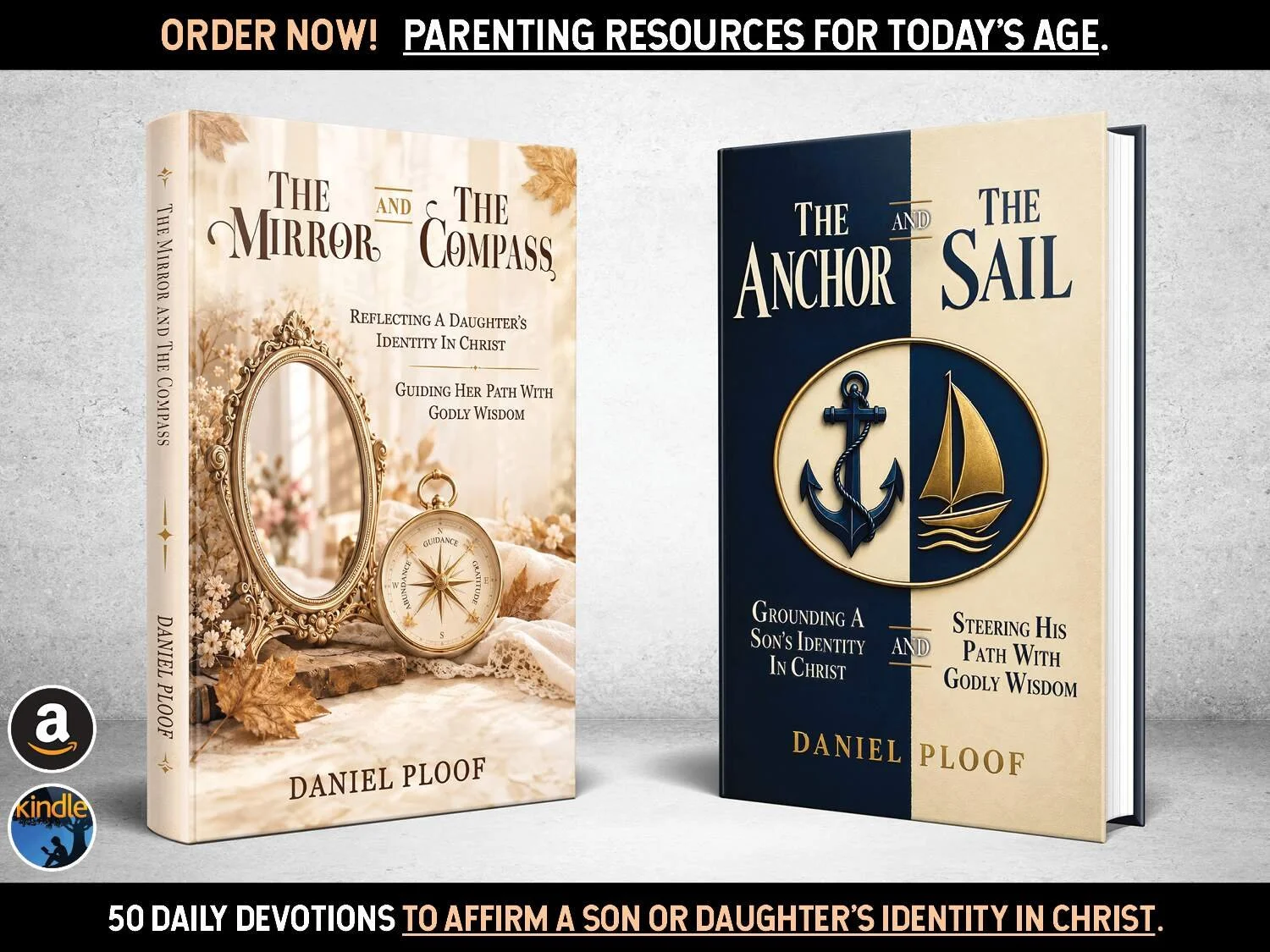
Ironically, this song mirrors the premise of TWO NEW BOOKS I published in Sept & Oct, 2026, which focus on the importance of affirming a son or daughter’s identity in Christ while guiding their life’s journey with absolute truth from God’s Word.
Introducing the “WHO I AM” parenting series:
In totality, these two resources are designed to counter cultural lies which tempt boys and girls, men and women, to believe that personal identity is a figment of their imagination. In a world plagued by gender confusion and love of self, “The Mirror and The Compass” and “The Anchor and The Sail” seek to cast light into the darkness of post-modernistic relativism and speak truth in love.
They are written in the form of 50 letters from a parent to a son or daughter to promote affirmation and encouragement on a wide variety of topics pertaining to personal identity. What makes these books so powerful, though, is that they are dual-purpose. Each parent is a son or daughter in their own right, so it teaches us as much about ourselves as it does the children God gave us to shepherd.
VALUE:
As a “Girl Dad,” what I love most about “Daughter of the Most High” is that it is NOT a women’s liberation anthem. Rather, it is a call for women to humbly and enthusiastically embrace their identity in Christ. It does not celebrate self-worth but points a woman to God as the source of her strength when she trusts in the Lord completely.
“Blessed is the man [or woman] who trusts in the LORD, whose trust is the LORD. He [or she] is like a tree planted by water, that sends out its roots by the stream, and does not fear when heat comes, for its leaves remain green, and is not anxious in the year of drought, for it does not cease to bear fruit” (Jeremiah 17:7–8).
If we reflect upon the societal value women held in the first century, it was nearly insignificant. They were treated as second-class citizens with limited legal rights. They did not receive the privilege of receiving formal religious study but were expected to cook, clean, bear children, and be completely submissive to their husbands in every way.
Jesus had a different idea in mind, though. Compelled by love, respect, and admiration, He welcomed them to come alongside Him and learn with His twelve disciples. He was not put off by social or ethnic laws but welcomed and esteemed women from all backgrounds to be a part of His ministry.
In many ways, Jesus tore down religious and societal barriers to let women know they were seen, heard, and valued as much as anyone else. In fact, when He rose from the grave, Jesus first appeared to Mary Magdalene and encouraged her to proclaim the truth of His resurrection to the disciples (John 20:11-18).
“Mary Magdalene went and announced to the disciples, ‘I have seen the Lord’—and that he had said these things to her” (John 20:18).
CHOSEN:
When we think about what it means for men and women to be chosen by God, humility and gratitude should be at the forefront of our minds. How could a perfect and holy God choose to associate Himself with wretched sinners? It makes no sense, yet that is exactly what Jesus came to do—set captives free from the power of sin and death!
“The Spirit of the Lord is upon me, because he has anointed me to proclaim good news to the poor. He has sent me to proclaim liberty to the captives and recovering of sight to the blind, to set at liberty those who are oppressed, to proclaim the year of the Lord’s favor” (Luke 4:18–19).
He did not come down from His throne merely out of obligation. Jesus chose to enter this world and endure all of the trials and temptations mankind had fallen victim to since the Garden of Eden.
He chose to endure the cross and bear the weight of condemnation for all humanity. Therefore, we are left with no other response other than complete reverence and appreciation for the immeasurable sacrifice He made to secure our salvation.
“Surely he has borne our griefs and carried our sorrows; yet we esteemed him stricken, smitten by God, and afflicted. But he was pierced for our transgressions; he was crushed for our iniquities; upon him was the chastisement that brought us peace, and with his wounds we are healed” (Isaiah 53:4–5).
RESPONSE:
What then should our response be?
Jesus said, “Go and bear fruit and that your fruit should abide.” In other words, do not sit idle but remain steadfast in the absolute truth of Scripture. If we have tasted the seen that the Lord is good, we must share the Gospel of salvation with others and live a life worthy of the sacrifice Jesus made to save us!
“Therefore, my beloved, as you have always obeyed, so now, not only as in my presence but much more in my absence, work out your own salvation with fear and trembling, for it is God who works in you, both to will and to work for his good pleasure” (Philippians 2:12–13).
More importantly, our Lord and Savior taught us to abide in Him so that our hearts are aligned with His and the Father’s. Oftentimes, we assume we are living for Christ when our attitude and motivation are actually self-serving. On the surface, we believe He is at the center of our decision-making. However, our hearts are often disconnected from the truth of His Word when we lean upon self-reliance.
“Abide in me, and I in you. As the branch cannot bear fruit by itself, unless it abides in the vine, neither can you, unless you abide in me. I am the vine; you are the branches. Whoever abides in me and I in him, he it is that bears much fruit, for apart from me you can do nothing” (John 15:4–5).
As such, we must be cognoscente that a vine which is cut off from Jesus’ presence is merely discarded and thrown into the fire to be burned. Without the truth of the Gospel ever-present in our hearts, we are destined to rebel against His grace and mercy rather than embracing it as our wellspring of abundant life.
BOTTOM-LINE:
For the son or daughter who doubts whether their life has purpose and meaning, look no further than John 15:16 as proof that God cares for us far more than we realize.
We all drift off-course at times in our journey of faith. What we must remember is that our heavenly Father waits patiently for us to come to our senses and return home. On occasion, He may leave the ninety-nine and come after us to ensure we are safe and sound, but other times He simply waits until we see the error of our ways.
‘‘Whoever confesses that Jesus is the Son of God, God abides in him, and he in God. So we have come to know and to believe the love that God has for us. God is love, and whoever abides in love abides in God, and God abides in him” (1 John 4:15–16).
Whether we take the time to read “The Mirror and The Compass” or “The Anchor and The Sail,” the same biblical truth remains that apart from Christ, we can do nothing. He is our source of life and breath, and all the joy we have the privilege of experiencing is meaningless apart from a personal relationship with Him.
If we are in Christ, we can confidently declare, “I know who I am, and I know whose I am.” The only question which remains is whether we will keep the Good News of Jesus Christ to ourselves (and quench the Spirit) or allow the Lord to use us for His glory and preach the Gospel of salvation to lost souls.
Either way, the name of Jesus will be proclaimed to the nations whether we answer the call or not. However, we are better served aligning our personal will with His sovereignty and fulfilling the Great Commission rather than turning our backs on the One who died for our sins and ultimately set us free for eternity.












“You did not choose me, but I chose you and appointed you that you should go and bear fruit and that your fruit should abide, so that whatever you ask the Father in my name, he may give it to you” (John 15:16).